Choosing laundry equipment is a long-term decision. The right machines should serve your customers today while giving your business room to adapt as technology, operating needs and customer expectations change. When evaluating equipment, look at three kinds of flexibility: how machines connect with other systems, how easily their programs can be adjusted, and how much freedom you have when installing or moving them.
Connect With the Systems Your Store Needs
Washers may need to work with payment systems, chemical injection equipment or ozone systems. Before buying, confirm that the machines can communicate with the systems you plan to use — and that they can accommodate upgrades you may want later.
A strong connection between the washer and payment system can help you manage cycle settings and vend prices, run promotions, review turns and revenue and support loyalty programs. It can also help the payment system work smoothly with your point-of-sale tools and customer interface.
If you use automatic chemical injection, check that the washer is compatible with it. Materials such as seals, gaskets and fittings need to be suited to the chemicals and conditions involved. An independently controlled third water inlet, either built in or available as an option, can also allow a diluted additive to enter the wash wheel at a specific point in the cycle.
Some washers can also be paired with an auxiliary electric heat kit. Depending on the equipment and your store’s needs, this may let you reach and maintain higher water temperatures without replacing your existing hot-water system. Confirm the washer’s temperature range and capabilities with the manufacturer before making a decision.
Choose Controls That Can Adapt
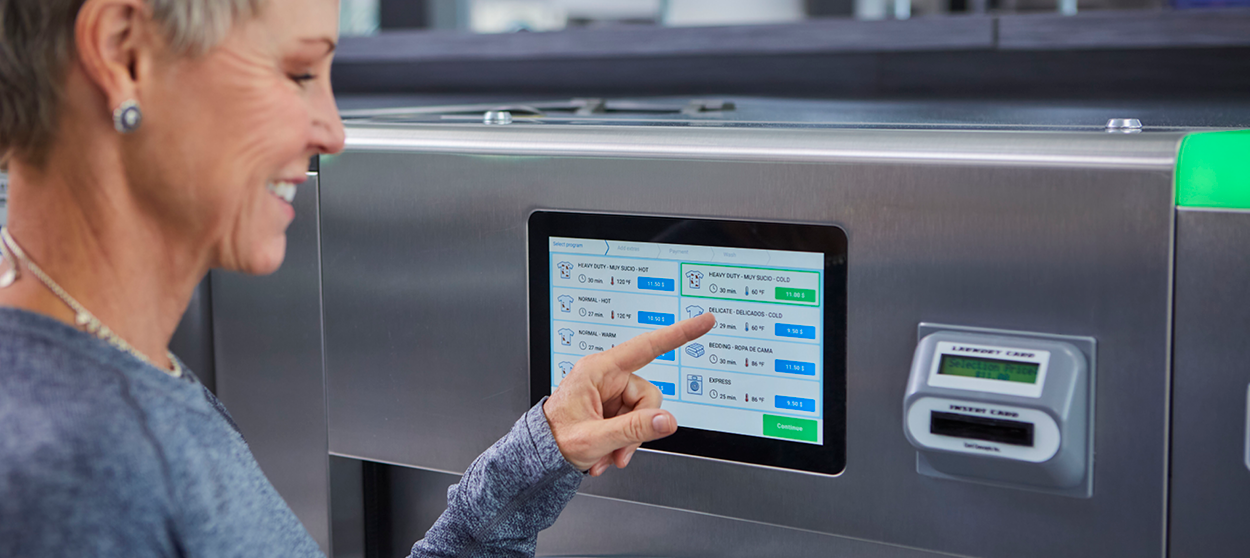
Flexible controls let you adjust cycles as your business needs change. Depending on the machine, you may be able to change water levels, temperatures, bath and rinse counts and extraction speeds, either at the machine or remotely.
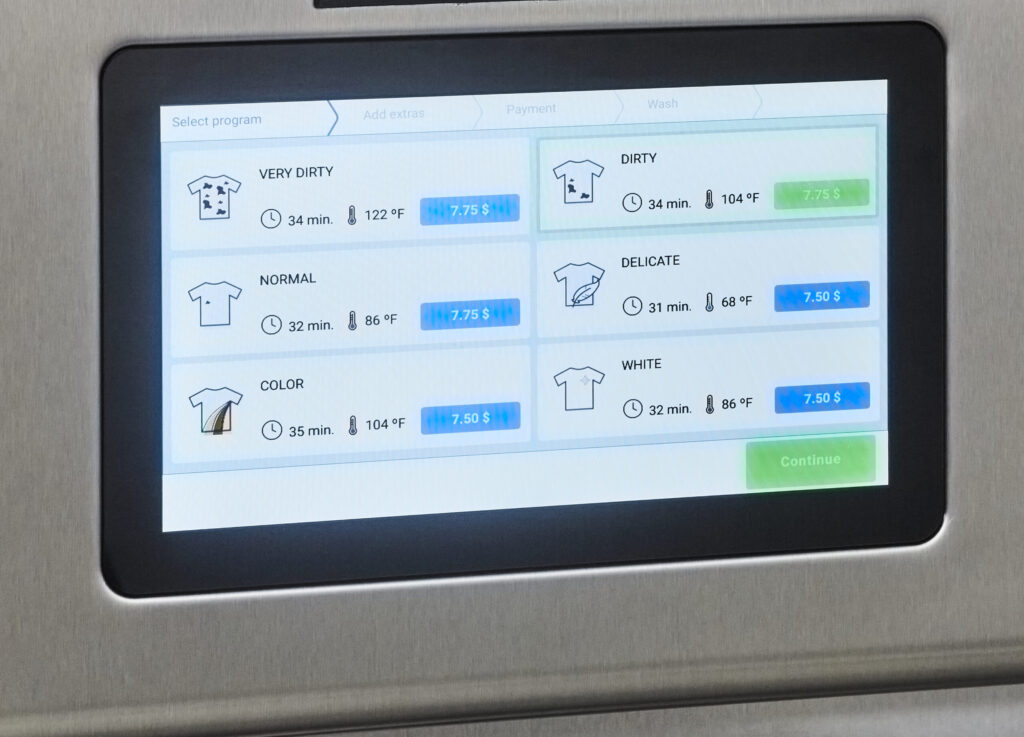
Look for controls that also make routine maintenance easier. In addition to standard cycles such as cold, warm and hot, some controls let customers select extras such as an additional wash, rinse or spin. These options can make the store more convenient for customers while giving owners flexibility to tailor the available cycles. Ask whether the manufacturer offers control or microprocessor upgrades. Technology changes over time and upgrade options can help extend the usefulness of your equipment without requiring a full machine replacement.
Consider Installation Requirements
Installation choices affect both your initial setup and your ability to reconfigure the store later. Soft-mount, freestanding washers can be positioned without being bolted to a reinforced concrete foundation. That can simplify installation and make it easier to move machines if you change your store layout.
This can be useful when adjusting the mix of machine sizes or shifting high-demand equipment to a different part of the store. Ask the Continental West team what floor, utility and space requirements apply to each model before planning a layout.
Soft-mount washers are also available with high extraction speeds. By removing more water during the wash cycle, they can reduce the time loads spend in dryers. That helps improve customer throughput and manage energy use, depending on your equipment, utility rates and store operations. Compare extraction performance alongside purchase price, installation requirements and expected usage.
Plan for the Future
Flexible laundry equipment gives owners more ways to manage operations as needs change. Before purchasing, consider whether the machines can connect with your payment and chemistry systems, whether their controls can be updated and whether the installation gives you room to adjust your layout.
A conversation with the team at Continental West can help you match those features to your store’s plans and budget.