
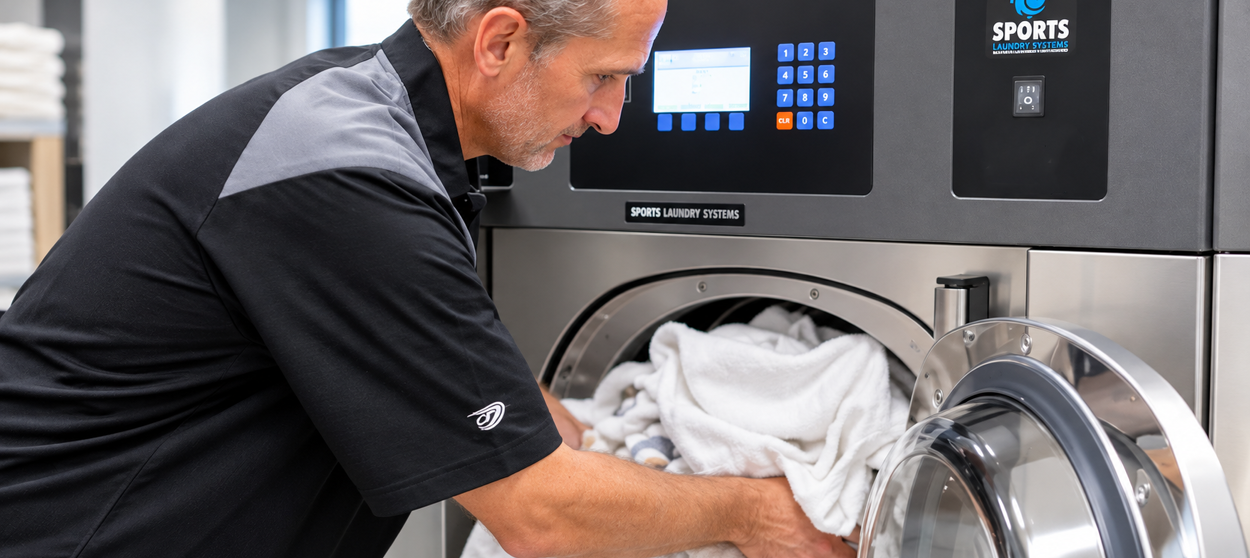
Athletic laundry does a lot of work. Towels, uniforms and practice uniforms absorb sweat and dirt every day. If they aren’t washed properly, germs and odors can linger — and laundry staff, coaches and athletes can be exposed along the way. A reliable laundry routine helps reduce those risks, protect equipment and keep uniforms ready for the next practice or game. Here are the key steps to build one.
Handle Soiled Laundry with Care
Set clear procedures for collecting, sorting and moving dirty laundry. Staff should follow your facility’s guidance for personal protective equipment, especially when handling visibly soiled items. Keep clean laundry separate from used items and wash hands after handling laundry and at the end of each shift.
Use designated carts or bins for soiled items and clean them regularly. Avoid shaking laundry, which can spread dust and debris through the air.
Clean First, Then Disinfect
Surfaces such as folding tables, laundry carts, counters, machine controls and door handles need regular attention. Start by cleaning them with soap and water to remove visible dirt. Then, use a disinfectant approved for the surface and follow the product label. Pay close attention to the label’s contact time — the length of time the surface must remain wet for the product to work. Using a product incorrectly can make the process less effective and may damage equipment or finishes.
Match the Wash Settings to the Load
A programmable washer can help make laundry results more consistent. Once cycles are set up for different items — such as towels, uniforms or practice gear — operators can select the right program without having to make a series of adjustments by hand. A well-programmed cycle controls water level, temperature, number of rinses and cycle length. That consistency helps reduce operator error and supports the care of uniforms.
Continental West can help athletic facilities evaluate laundry equipment options suited to their operation.
Choose an Appropriate Sanitizing Method
Facilities may use ozone, a chemical laundry sanitizer or a combination of products as part of their wash process. The right approach depends on the equipment, fabrics, soils and the performance standards your facility needs to meet.
Ozone is a form of oxygen used in some laundry systems. In a properly designed and validated system, it can support cleaning and sanitizing, often at lower wash temperatures. That may help protect fabric color and extend the useful life of uniforms.
If you are considering ozone, ask how the system monitors and verifies ozone levels during the wash. Confirm that the equipment is compatible with your washer and that the process is appropriate for the items being laundered.
A laundry sanitizer is added during the wash according to its label directions and the facility’s process. Some products are designed for use on a range of fabric types, but compatibility should always be confirmed before treating uniforms or protective equipment.
Work with your chemical supplier to select and dose products appropriately. The supplier can also help ensure that dispensing equipment and wash programs deliver the product at the correct time in the cycle.
Make the Routine Repeatable
Good laundry practices work best when everyone follows the same steps. Document which cycle to use for each item type, how to handle heavily soiled uniforms, which products are approved and how machines and work surfaces are cleaned. Train new operators and review the process when equipment, products or uniforms change.
Consistent handling, suitable wash programs and an appropriate sanitizing method can help athletic programs keep laundry cleaner, protect gear, and support a healthier environment for athletes and staff.